A QOS ESTIMATION ALGORITHM FROM CALLER RINGTONE ANALYSIS IN GSM NETWORK
DOI:
https://doi.org/10.15282/ijsecs.8.1.2022.6.0096Keywords:
Quality of Service, Call set up time, Mobile Network, Ringtone, MSEAbstract
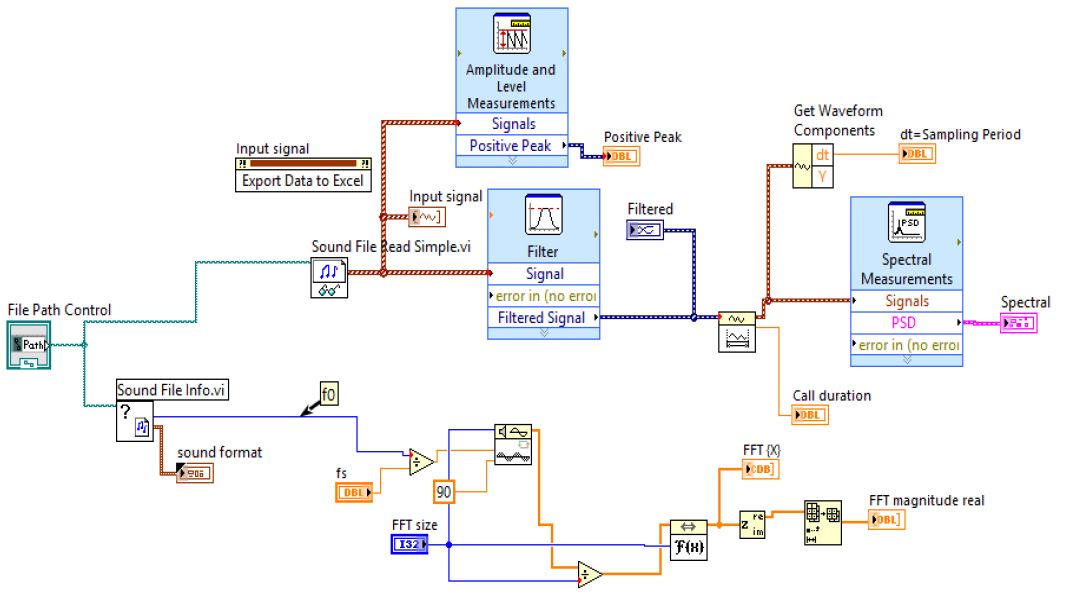
Call Setup Time (CST) is one of the key performance indicators (KPIs) that Mobile Network Providers (MNPs) are mostly appertain. It has been established that long CST usually severely affects the user experience. Owing to the limitations associated with gleaning the CST data from MNPs, this paper provides the development of QoS estimation algorithm from various CST parameters. The algorithm involves the determination of CST; Inter-Burst time; Intra-Burst time and Call duration in time domain. The caller Frequency content was also determined by the application of fast Fourier Transform before computing the Mean Square Error (MSE). The eventual QoS rating is done after the computation of the MSE from various individual parameters. Four hourly data consisting of 10 sets each were collected three times in a week for four weeks for each MNP’s for creating Caller Ringtone dataset and testing the developed algorithm. Performance analysis of the system in accurately determining: CST; Intraburst time; Interburst time and Call durations were carried out. Results obtained shows that the proposed technique accurately computes these parameters and maximum error obtained was to the value of 10%. Furthermore, the QoS obtained shows an error margin of less than 5 % was observed when the developed technique was compared to the ground truth. Thus, the proposed algorithm was able to compute the QoS using Caller Ringtone only, thus independent of MNP.
Downloads
References
B. V. Sireesha and S. Varadarajan, “Increasing Of Call Success Rate In GSM Service Area Using RF Optimization,” vol. 1,
no. 4, pp. 1479–1485.
Z. A. Dahi, E. Alba, and G. Luque. "A takeover time-driven adaptive evolutionary algorithm for mobile user tracking in pre-
G cellular networks". Applied Soft Computing. 2021 Oct 27:107992.
H. Hassan, R. W. Goshie, A. Jimada, R. Oyewumi, S. Amata. "Customers’ Intension to Change Mobile Communication
Networks Regarding Quality of Information Services Provision in Zaria Metropolis". i-manager's Journal on Mobile
Applications and Technologies. 2019;6(1):27.
Y. H. Lu, C. Y. Li, Y. Y. Li, S. H. Hsiao, T. Xie, G. H. Tu, and W. X. Chen. "Ghost calls from operational 4G call systems:
IMS vulnerability, call DoS attack, and countermeasure". In Proceedings of the 26th Annual International Conference on
Mobile Computing and Networking 2020 Apr 16 (pp. 1-14).
A. M. Aibinu, A. J. Onumanyi, and S. Africa, “Automatic determination of call setup time and and ring tone quality of service
in GSM Network” International Engineering Conference IEC, September, 2015 (pp.424-430).
E. Amaldi, A. Capone, and F. Malucelli, “Radio planning and coverage optimization of 3G cellular networks,” Wirel.
Networks, vol. 14, no. 4, pp. 435–447, 2008, doi: 10.1007/s11276-006-0729-3.
F. C. De Gouveia and T. Magedanz, “quality of service in telecommunication networks." Telecommunication systems and
technologies, 2(5), pp. 77-84
M. Alipio, N. M. Tiglao, F. Bokhari, and S. Khalid. "TCP incast solutions in data center networks: A classification and
survey". Journal of Network and Computer Applications. 2019 Nov 15;146:102421.
K. N. R. S. V. Prasad, H. K. Rath, and A. Simha, “Wireless mobile network planning and optimization.” In 2014 sixth
International Conference on Communication Systems and Networks (COMSNETS) (pp. 1-4). IEEE
J. Agajo, A. L. Theophilus, V. E. Idigo, K. I. Apkado, F. Polytechnic, and E. State, “Optimization of Network Performance
in Wireless Communication Networks.” The Pacific Journal of Science and Technology. 2012 vol.13(1), (pp.334-350)
N. Khan, M. U. Akram, A. Shah, N. S. Alghamdi, and S. A. Khan. "Capturing the real customer experience based on the
parameters in the call detail records". Multimedia Tools and Applications. 2021 Jun 4:1-23.
S. R. Srivastava, S. Dube, G. Shrivastaya, and K. Sharma. "Smartphone triggered security challenges—Issues, case studies
and prevention." Cyber Security in Parallel and Distributed Computing: Concepts, Techniques, Applications and Case Studies.
(pp.187-206).
M. Kollár, “Evaluation of Real Call Set Up Success Rate in Gsm,” vol. 8, no. 3, pp. 53–56, 2008.
B. Haider, M. Zafrullah, and M. K. Islam, “Radio Frequency Optimization & QoS Evaluation in Operational GSM Network,”
Lect. Notes Eng. Comput. Sci., vol. 2178, no. 1, pp. 393–398, 2009.
M. E. Hossain, M. W. Rahman, M. T. Islam, and M. S. Hossain.
"Manifesting a mobile application on safety which ascertains women salus in Bangladesh". International Journal of Electrical
and Computer Engineering. 2019 Oct 1;9(5):4355.
B. Appiah, A. Yoshikawa, L. Asamoah-Akuoko, D. A. Anum, I. A. Kretchy, E. Samman, A. Goulart, J. Nwokike, A. N.
Dodoo, D. M. Darko, and A. Rene. "Consumer reporting of suspected adverse drug reactions: modelling the acceptance of
mobile phone caller tunes to raise awareness". Journal of Pharmaceutical Health Services Research. 2020 Mar;11(1):39-48.
D. Aliu and M. O. Momoh (2021) “Optimal Resource Scheduling Algorithm for OFDMA-based Multicast Traffic Delivery
over WIMAX Networks using Particle Swarm Optimization” International Journal of Software Engineering & Computer
Systems (IJSECS). VOL.7, (1), August 2021. 50-63
R. Budhiraja and J. S. Jadon, “Study And Implementation Of Drive Test For Development Of GSM Network,” Int. J. Eng.
Trends Technol. – Vol. 4 Issue 10 - Oct 2013, vol. 4, no. 10, pp. 4352–4357, 2013.
O. R. Abubakre, O. Ubadike, A. M. Aibinu, T. A. Folorunso, and M. O. Momoh, (2021). "Artificial Neural Network
Embedded Optimal Mobile Communication System". Covenant Journal of Informatics and Communication Technology, 9(2)
Downloads
Published
Issue
Section
License
Copyright (c) 2022 Oluwabukola Ayo-Bello, Abiodun Musa Aibinu, Osichinaka Ubadike, Adeiza James Onumanyi, Muyideen Omuya Momoh

This work is licensed under a Creative Commons Attribution-NonCommercial 4.0 International License.